Drug-development leadership
Led multidisciplinary programs from platform discovery through translational and preclinical development, integrating pharmacology, PK/PD, efficacy, safety, and bioanalysis into program decisions.
BIOTECHNOLOGY R&D LEADERSHIP
That is the goal that drives my work. Over 13 years, I have combined deep scientific training, company-building and operating experience, investment judgment, and translational R&D leadership to move promising biology from discovery toward development. My work spans small molecules, antibodies, oligonucleotides, peptides, and AAVs, with particular depth in CNS delivery.
Published in Nature Chemical Biology. As a co-first author, I helped develop and validate BrainCAB, a modular approach for transporting biologic therapeutics across the blood–brain barrier.
EXECUTIVE PROFILE
A multidisciplinary perspective shaped by academic research, therapeutic development, venture investing, and hands-on biotech operations.
Led multidisciplinary programs from platform discovery through translational and preclinical development, integrating pharmacology, PK/PD, efficacy, safety, and bioanalysis into program decisions.
Co-founded and scaled a biotechnology company through a ~$60M Series A, establishing teams, research capabilities, external partnerships, and operating processes.
Combines deep academic training with venture experience evaluating scientific differentiation, unmet need, development risk, intellectual property, and company-building potential.
Works across small molecules, antibodies, oligonucleotides, and peptides, bringing together internal teams, CROs, academic partners, and AI-assisted workflows around shared development goals.
CAREER
Receptive Bio
Built and led multidisciplinary internal teams and external CRO and academic partnerships, applying AI-assisted workflows to evidence synthesis, research planning, and decision support while advancing a neurodegeneration antibody program toward pre-IND readiness.
California Institute of Technology
Led collaborative discovery of BBB-relevant mechanisms and molecular targets for systemic AAV transport, integrating high-throughput experiments, computational analysis, and structure-informed approaches to engineer CNS-delivery binders.
Foresite Capital
Worked across investors, scientists, operators, and external experts to assess emerging drug-delivery companies, integrating scientific, business, intellectual-property, and competitive evidence into investment recommendations.
California Institute of Technology
Engineered systemic AAV capsids for CNS and PNS delivery and collaborated with more than 30 laboratories worldwide to validate and apply the resulting tools across neuroscience, gene therapy, and disease-modeling studies.
LEADERSHIP & COMPANY BUILDING
Experience across the full arc of company creation: establishing platform strategy and intellectual property, building teams and external capabilities, supporting financing, and advancing programs toward development.
Co-founded Receptive Bio, helped establish its scientific strategy and financing narrative, and supported the organization’s growth to more than 25 employees.
Helped scale Receptive Bio to more than 25 employees while establishing and leading integrated in vitro, in vivo, bioanalytical, and translational workstreams.
Advanced a neurodegeneration antibody program from preclinical proof of concept toward pre-IND readiness and contributed to pharmacology and ADME strategy for regulatory interactions.
RESEARCH TRAJECTORY
Beginning with current translational program development, the section traces my research backward through blood–brain barrier transport, cross-species gene delivery, and foundational neuroscience.
 Receptive Bio
I lead multidisciplinary teams and external partners in integrating pharmacology, biodistribution, PK/PD, efficacy, safety, and bioanalytical evidence; defining dose and route-of-administration strategy; and advancing a neurodegeneration antibody program toward pre-IND readiness.
What evidence is required to convert a promising delivery signal into a differentiated and developable therapeutic program?
Built integrated evidence packages across pharmacology, PK/PD, biodistribution, efficacy, safety, and bioanalysis, supported by internal teams, CROs, academic partners, and AI-assisted research workflows.
Applied decision criteria to lead selection, dose and route-of-administration strategy, and study design while advancing a neurodegeneration antibody program toward pre-IND readiness.
 CaltechReceptive Bio
At Receptive Bio, I established foundational platform strategy and intellectual property for receptor-mediated CNS delivery. The work spans target and shuttle validation, cargo conjugation, pharmacology, and translational studies across small molecules, antibodies, peptides and proteins, ASOs, and siRNAs.
Can endogenous transport mechanisms at the blood–brain barrier be used to deliver diverse therapeutic cargos into the CNS?
Integrated target discovery, shuttle validation, molecular engineering, conjugation, in vitro characterization, and rodent and non-human-primate pharmacology and biodistribution.
Established a cross-modality platform strategy spanning small molecules, antibodies, peptides and proteins, ASOs, and siRNAs, with cross-species evidence guiding target and cargo selection.
CaltechDuring my doctoral work, I engineered systemic AAV vectors for delivery to the central and peripheral nervous systems. The research integrated capsid-library design, in vivo directed evolution, NGS-based screening, computational analysis, and validation across rodents and non-human primates, supporting collaborations with more than 30 laboratories worldwide.
Can systemically administered gene-delivery vectors achieve broad nervous-system access while retaining performance across species?
Developed high-diversity capsid libraries and integrated in vivo selection, next-generation sequencing, computational ranking, and functional validation in rodents and non-human primates.
Produced broadly shared AAV tools and mechanistic insights into blood–brain barrier transport, enabling functional CNS and PNS delivery and research across more than 30 collaborating laboratories.
 Tongji University
 MIT
MITAt Tongji University, I investigated APP-driven Alzheimer’s disease pathology in Drosophila using genetic tools, behavioral assays, and small-molecule interventions. At MIT, I mapped medial prefrontal circuits associated with compulsive alcohol seeking using viral tracing, calcium imaging, and behavioral assays; this work contributed to a publication in Science.
How do disease-linked genes and defined neural circuits produce measurable changes in behavior?
Combined Drosophila genetics, APP-driven disease models, small-molecule perturbation, and behavioral phenotyping with viral tracing and in vivo calcium imaging in mice.
Connected molecular and circuit-level mechanisms to disease-relevant behavior, including work identifying circuitry associated with compulsive alcohol consumption.
REPRESENTATIVE RESEARCH
A thematic view of my research, from current CNS therapeutic-delivery programs to receptor discovery, systemic AAV engineering, and foundational neuroscience.
RESEARCH AREA
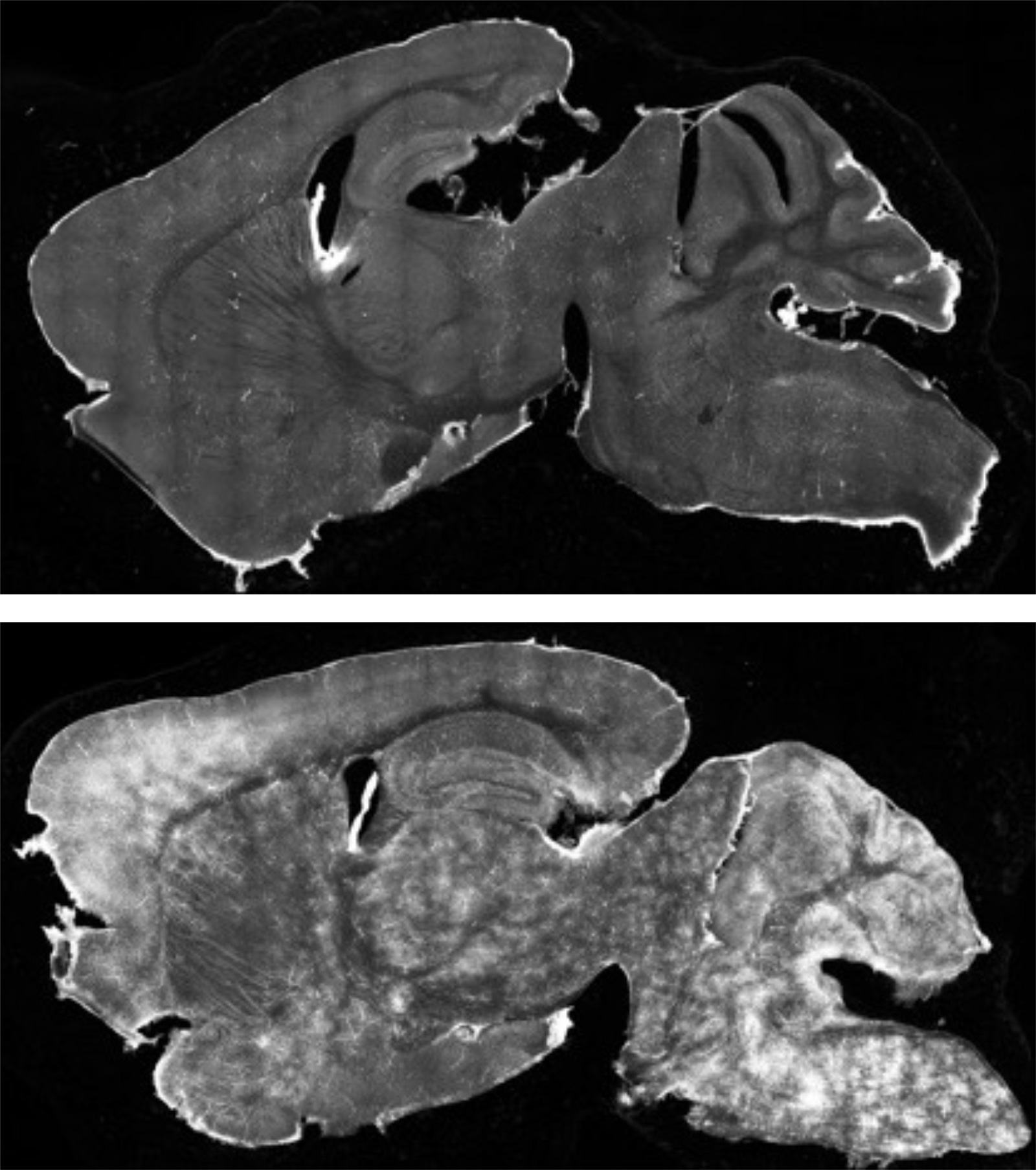 Atezolizumab brain delivery with and without BrainCAB · Gradinaru Lab / Caltech
Co-first-authored the development of BrainCAB, a modular small-molecule shuttle that engages CA-IV to enhance and prolong brain delivery of biologic cargos, with validation in rodents and non-human primates.
Read the paperCaltech highlights the BrainCAB discovery, my role as a co-first author, and the translation of the platform through Receptive Bio toward potential clinical development.
Read the Caltech featureRESEARCH AREA
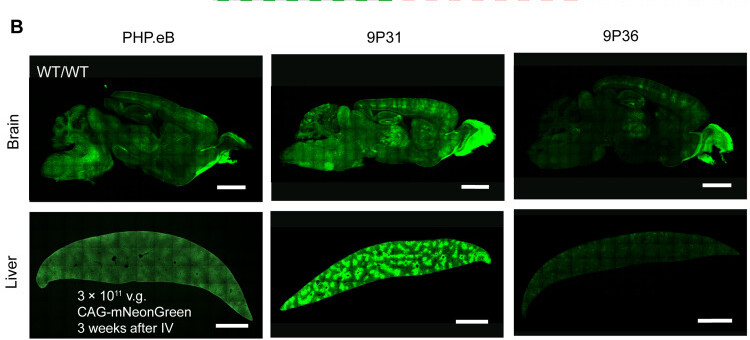 Selected panel from Huang et al., Science Advances (2023)
Identified CA-IV as a conserved receptor that supports brain delivery by engineered AAVs, connecting cross-species vector performance with a defined blood–brain barrier transport mechanism.
Read the paper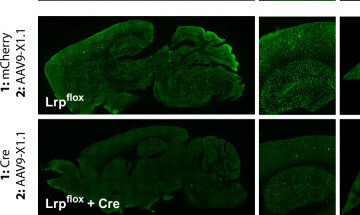 Selected panel from Huang et al., Nature Communications (2024), CC BY 4.0
Used receptor-focused interaction mapping and functional validation to identify LRP6 as a blood–brain barrier transcytosis receptor and establish a path toward receptor-guided delivery.
Read the paperRESEARCH AREA
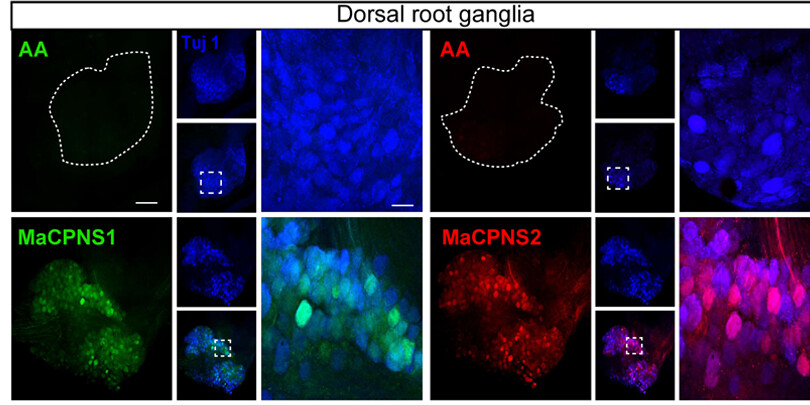 Selected panel from Chen et al., Neuron (2022)
Developed MaCPNS1 and MaCPNS2, systemic AAV vectors enabling efficient peripheral nervous-system access in rodents and broader nervous-system delivery in non-human primates.
Read the paper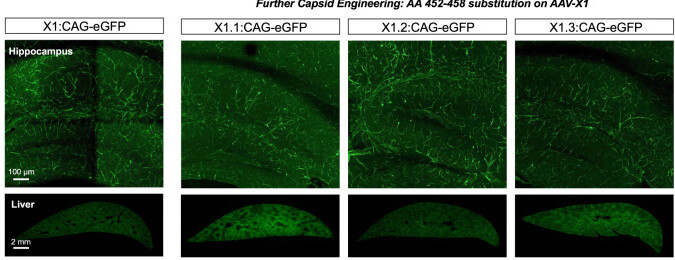 Selected panel from Chen et al., Nature Communications (2023), CC BY 4.0
Led development of the X1 vector family for efficient targeting of brain endothelial cells after systemic administration, with validation across rodents, non-human primates, and human brain tissue.
Read the paperRESEARCH AREA
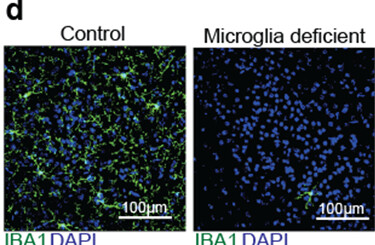 Selected panel from Badimon et al., Nature (2020)
Contributed neuronal activity analysis to a multidisciplinary study showing that microglia sense extracellular ATP and promote adenosine signaling to restrain excessive neuronal activation.
Read the paper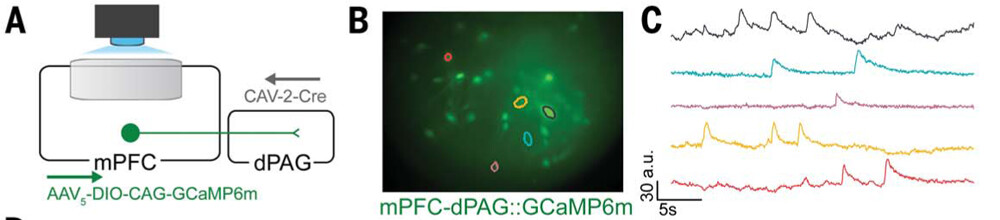 Selected panels from Siciliano et al., Science (2019)
Contributed to work identifying a medial prefrontal–brainstem circuit whose activity predicts and governs compulsive alcohol consumption despite adverse consequences.
Read the paperRESEARCH OUTPUT
Peer-reviewed research and intellectual property spanning neuroscience, gene delivery, blood–brain barrier biology, protein engineering, and therapeutic delivery.
PUBLICATIONS
Contributions across Nature, Science, Neuron, Nature Chemical Biology, Nature Biotechnology, and Nature Communications.
Nature Chemical Biology
Science
bioRxiv · Preprint
bioRxiv · Preprint
Nature Metabolism
Cell Reports
Nature Biotechnology
Nature Communications
Molecular Therapy
Nature Nanotechnology
Nature Communications
Science Advances
Nature Biotechnology
Current Research in Neurobiology
Annual Review of Neuroscience
Neuron
Journal of Neuroscience
Nature Communications
Cell Reports
Nature
Nature Methods
Science
Apoptosis
Open Biology
PATENT APPLICATIONS
Selected applications covering receptor-mediated therapeutic delivery, engineered AAV vectors, blood–brain barrier transport, and tissue-targeted gene delivery.
WO2025054419A1
WO2025054461A1
WO2025054465A1 · AU2024338011A1
US20250001007A1
WO2024238612A2 · EP4713339A2
US20240382617A1
WO2024092164A1 · US20240139329A1
WO2022235702A1 · US20240197919A1
EDUCATION
Formal training in neurobiology and biotechnology established the scientific foundation for my work in CNS delivery and therapeutic development.
California Institute of TechnologyPasadena, California
Graduate research in the Gradinaru Lab integrated neurobiology, bioengineering, protein engineering, and translational gene delivery, with a central focus on systemic AAV vectors for the CNS and PNS across species.
Thesis recognized with the Audrey W. Ferguson Prize and the International Brain Barriers Society Junior Investigator Prize.
Tongji UniversityShanghai, China
Built a foundation in molecular biology, genetics, and neuroscience through research on APP-driven Alzheimer’s disease pathology in Drosophila and leadership of an optogenetics-focused iGEM team.
Graduated first in a class of 80 and was recognized as an Outstanding Graduate of Shanghai.
SELECTED RECOGNITION
California Institute of Technology
Recognized as the best PhD thesis in the Division of Biology and Biological Engineering.
International Brain Barriers Society
Awarded for excellence in CNS barriers and drug-delivery science.
American Society of Gene & Cell Therapy
Recognized twice for meritorious scientific abstracts presented at the ASGCT Annual Meeting.
Chen Institute for Neuroscience, Caltech
Graduate fellowship designation supporting interdisciplinary neuroscience research and training at Caltech.
BEYOND THE LAB
Co-founded and chaired an international forum connecting early-career scientists, innovators, and entrepreneurs.
Served as Co-Director of Strategy, supporting scientific founders through mentorship, operator engagement, and investor connections.
Co-founded and served as scientific editor and writer for a platform communicating scientific ideas to broader audiences.